Concept map maker
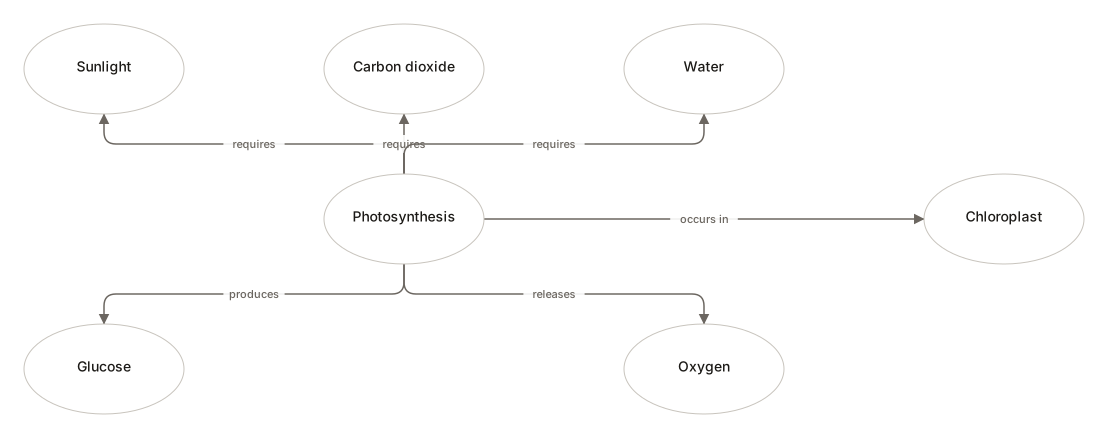
Unlike a mind map, the line carries meaning. Photosynthesis *requires* sunlight — and writing that word on the connector is most of the thinking.
No account. Saved in this browser until you export it.
The pieces
What goes on the canvas
- Concept
- One idea, named
- Example
- A concrete instance
- Note
- A definition or caveat
Building one
From blank canvas to finished diagram
- 1Add the concepts as separate nodes. One idea each, named as precisely as you can.
- 2Connect two, then label the connector with the verb that joins them.
- 3If you cannot name the relationship, you have found something you do not yet understand.
- 4Cross-link between branches. Concept maps are graphs, not trees, and the cross-links are usually the interesting part.
Examples
Start from a real one
Where it helps
Good uses
Studying
Naming relationships tests understanding in a way rereading does not.
Domain modelling
The vocabulary of a system, before the schema.
Teaching
Shows what a learner has connected and what they have not.
Research synthesis
How findings from different sources relate.
Questions
Asked often
- How is this different from a mind map?
- A mind map is a tree radiating from one topic, and the lines just mean "belongs to". A concept map is a graph where every line is labelled with a specific relationship.
- Why do labels matter so much?
- An unlabelled line between two concepts asserts that they are related without saying how — which is the part worth knowing.
- Can concepts have several parents?
- Yes. That is the point of a graph, and those cross-links are usually where the insight is.
- Is it stored online?
- No. It stays in this browser until you export it.
Name the relationships
Nothing to sign up for. The diagram stays on this device.